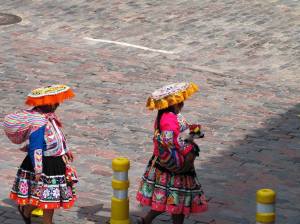
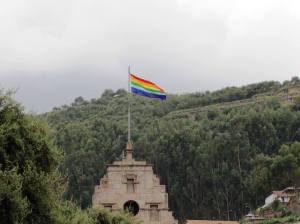
The Incas are fascinating. I guess I should say “were fascinating” since the Spanish basically wiped them out when they “colonized” South America. Not to get too dark on this blog post, but it is impossible to talk about the Incas without talking about how their culture vanished thanks to Europeans. But I’ll get to that later. I flew into Cusco on a really nice day. Peru has local airlines that take you to a few places around the country. It is easy to catch a cheap flight from Lima to Cusco thanks to the tourism industry. You cannot get to Machu Picchu without going to Cusco. (Now, before you freak out and say “but Bryan! There are actually ways to do it!” Yes, but it’s significantly harder. So unless you’re going to spend 12 hours on a bus to take a train from another city or a month hiking through the jungle/forest, let’s just say you cannot get to Machu Picchu without going to Cusco first.)
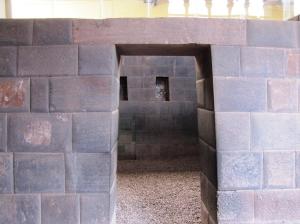
Cusco is a town that was the heart of the Inca Empire and as such it plays host to 2 million tourists a year. You can see walls built by the Incas that still stand today. In fact, the Spanish kept many of the walls built by the Incas because they were so well built. They are so well built, you cannot put a knife or straw between the rocks. They didn’t use concrete or mortar, instead that just shaped the rocks so perfectly they sit without any space between blocks. It is amazing. They hand carved all of these rocks so well, it almost looks like one piece of stone. There was an earthquake awhile back and many of the old Spanish buildings fell down. Supposedly the Inca Walls just bounced up and down then settled in the exact spot that they were before.
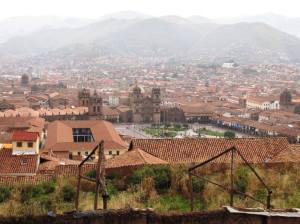
I took a taxi from the airport to the old town area of Cusco where I was staying in a cheap hostel. My Spanish (although still terrible) was good enough to engage the cab driver in small talk. One of the things I was told by everyone in Lima was that Cusco is cold. “Cusco? Hace frio!” they would all say. It was not at all cold in Cusco in December. When I told my driver what people in Lima say, he called them all stupid. My hostel was close to the Plaza de Armas which is the main tourist area of Cusco. It is a plaza (or square) featuring not one, but two massive cathedrals, lots of shopping, lots of places to eat, and lots of people. The best view of the city is just up a big hill from this spot. There’s a church located at the top of the hill and I recommend taking the hike. You’ll get a good overview of the city’s red roofs. Also, make sure you swing by the Plaza at night. Actually, just walk around Cusco at night. The entire place is lit up.
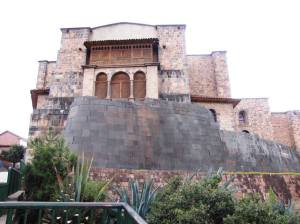
There are a number of places to go to see Inca ruins around the Cusco area, but if you dont want to leave the city the easiest is Qurikancha and Convento de Santo Domingo. This is a convent built by the Spanish on top of an Inca sanctuary to the sun god. It is a perfect place to see those walls I was referring to earlier. It costs a few sols (their currency which at the time was 3 to 1 US dollar) to get in but it is worth it. You get to see really well preserved Inca structures since the Spanish just went ahead and used them for their own devises. This is another cool sight at night. Peru really likes to light up it’s cool looking buildings and you get rewarded as a result. Also, remember how awesome the food is in Peru? Well here in Cusco you get to experience an Andean diet. Which features guinea pig, llama, and cow heart. All of which is really, really good.